In many regions, ordering a Toyota through official channels means waiting six to twelve months for delivery — and when the vehicle finally arrives, it often comes in a lower specification trim than the buyer originally wanted, because allocation constraints force distributors to accept whatever configuration is available. For importers and fleet operators who need to move inventory quickly and offer competitive specifications to their customers, this combination of long lead times and limited trim choice is a genuine commercial problem. That is why a growing number of distributors are re-evaluating the new Corolla Cross supply options and looking seriously at China-market variants — specifically the Corolla Cross Pioneer Edition— as a sourcing alternative that combines stronger in-cabin technology, upgraded driver assistance through T-Pilot, and the delivery speed that China's mature automotive supply chain makes possible.
This article compares the Pioneer Edition's specification advantages against typical global variants, explains the supply chain dynamics that enable faster delivery, and builds the import execution framework that distributors need to capture the advantage without compliance surprises.
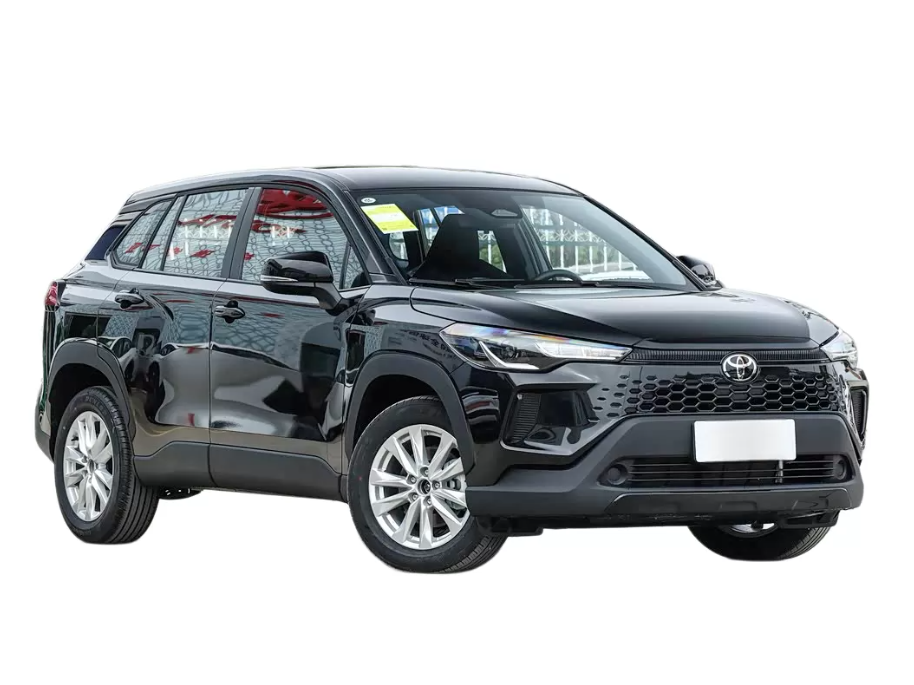
How the New Corolla Cross Self-Charging Hybrid Works — and Why It Matters for Distributors
What "Self-Charging Hybrid" Means in Sourcing Conversations
The 2026 Corolla Cross uses a self-charging hybrid system — a parallel hybrid architecture where the petrol engine and electric motor work together, with the battery recharged through regenerative braking and engine management rather than external charging infrastructure. The driver never needs to plug in.
For distributors evaluating this vehicle for markets where public charging infrastructure is limited or unreliable, this is a significant practical advantage over plug-in hybrids or battery electric vehicles. The self-charging system delivers real-world fuel efficiency improvements over a pure petrol engine without adding the charging logistics that complicate EV adoption in many emerging and developing markets. Customers get lower running costs without changing their refueling behavior.
For fleet operators, the self-charging architecture also simplifies fleet management: no charging scheduling, no range anxiety, and no infrastructure investment required at the depot.
Why Variant Specifications Change the Ownership Experience
The Corolla Cross carries the same nameplate across multiple markets, but the specification content varies significantly by region. Hybrid calibration, ADAS package level, infotainment hardware, and safety feature bundles are all market-specific decisions made by Toyota's regional operations. A Corolla Cross sold in Southeast Asia, Europe, or the Middle East may share the same body and powertrain as the China-market Pioneer Edition but differ substantially in the technology and assistance features that determine the end-user experience.
For distributors competing on product value rather than just price, these specification differences matter. A vehicle with a larger infotainment screen, a more capable driver assistance suite, and a more complete safety package is a more compelling retail proposition — and in markets where the local Toyota allocation offers a de-contented trim, the China-market Pioneer Edition can represent a genuine step up in perceived value.
View the 2026 Corolla Cross Pioneer Edition specifications and request availability
Pioneer Edition Edge: What the Specification Upgrade Actually Delivers
The Pioneer Edition is positioned at the upper end of the China-market Corolla Cross lineup, with a specification package that reflects the competitive intensity of the Chinese automotive market — where consumers expect more technology content at each price point than many other markets.
Interior Technology and Infotainment
| Feature Area | Pioneer Edition (China) | Typical Mid-Spec Global Variant |
|---|
| Infotainment screen size | Larger display with enhanced UI | Smaller or standard display |
| Connectivity | Wireless smartphone integration, OTA-capable | Wired integration, limited OTA |
| Camera configuration | Multi-camera system including 360-degree view (as equipped) | Reversing camera standard; 360 view may be optional or unavailable |
| Audio system | Enhanced speaker configuration | Standard audio |
| UI language options | Multi-language support | Market-specific language only |
The infotainment and connectivity specification is the most visible difference for retail customers. In markets where buyers compare vehicles on screen size and smartphone integration capability, the Pioneer Edition's technology package is a direct competitive advantage over lower-spec local allocations.
T-Pilot Driver Assistance System
T-Pilot is Toyota's driver assistance package for the China market, integrating multiple active safety and convenience functions into a cohesive system. The package level available in the Pioneer Edition typically includes:
Adaptive cruise control with stop-and-go capability in traffic
Lane departure warning and lane centering assistance
Automatic emergency braking with pedestrian and cyclist detection
Blind spot monitoring and rear cross-traffic alert
Automatic high beam control
The specific functions available and their regulatory compliance status vary by destination market. Distributors should confirm which T-Pilot functions are active and compliant in their target market before using them as a sales feature — some ADAS functions may require local certification or may operate differently under local traffic regulations.
Safety and Convenience Package
| Feature | Pioneer Edition Standard Equipment |
|---|
| Airbags | Multiple airbags including side and curtain (confirm count per build sheet) |
| Parking assistance | Front and rear sensors with visual and audio guidance |
| Lighting | LED headlights and daytime running lights |
| Keyless entry and start | Standard |
| Powered tailgate | Available depending on configuration |
Spec Certainty for Overseas Buyers
The most common source of post-delivery disputes in cross-border vehicle sourcing is specification mismatch — the buyer expected a feature that is not present in the delivered unit. To prevent this, request the following from the supplier before confirming any order:
VIN-level build sheet or factory configuration list confirming all standard and optional equipment
Option codes for the specific unit or batch
A standardized photo set checklist covering interior technology, ADAS sensor locations, and all specification-relevant areas
Quick Delivery as a Competitive Weapon: China's Supply Chain Advantage
Why China Can Deliver Faster
China's automotive supply chain is one of the most developed and highest-volume in the world. Toyota's China manufacturing operations produce Corolla Cross units at scale, with a supply chain that supports consistent production volumes and shorter order-to-delivery cycles than many regional markets where Toyota production is more constrained.
The practical result for importers is that China-sourced Corolla Cross units can often be available for export within weeks rather than months — a lead time advantage that changes the economics of inventory management for distributors.
How Faster Lead Time Changes Unit Economics
| Metric | 6–12 Month Local Allocation | China-Sourced Quick Delivery |
|---|
| Floorplan or holding cost | High — capital tied up for months before sale | Lower — faster turnover reduces carrying cost |
| Customer satisfaction | Risk of cancellation during long wait | Higher — delivery commitment can be met |
| Inventory flexibility | Low — locked into allocation months in advance | Higher — can respond to demand signals |
| Pricing flexibility | Limited — long wait reduces negotiating leverage | Better — faster delivery supports premium positioning |
| Competitive positioning | Constrained by allocation | Differentiated by availability |
For distributors who are losing sales to competitors with faster delivery, the China sourcing option is not just a cost play — it is a competitive positioning tool. The ability to quote a realistic delivery date and deliver on it is a sales advantage that compounds over time through customer loyalty and referral.
Buyer Scenarios Where This Matters Most
Distributors with allocation shortages can use China-sourced inventory to stabilize their supply flow when local Toyota allocation is insufficient to meet demand. Rather than turning customers away or losing them to other brands, they can offer a higher-spec alternative with a credible delivery timeline.
Fleet and rental operators benefit from both the delivery speed and the specification consistency. A fleet manager who needs twenty units of the same trim for a corporate contract cannot wait twelve months for local allocation — and cannot accept a mixed specification batch. China-sourced Pioneer Edition units can be sourced in consistent specification batches with predictable delivery.
Emerging market distributors can offer a higher-specification vehicle than the locally available allocation, using the Pioneer Edition's technology package as a differentiation point in markets where buyers are increasingly specification-aware.
Import Readiness: Selecting and Executing the Corolla Cross Import
Regulatory Fit and Localization Requirements
Import execution for the new Corolla Cross requires confirming the following before any purchase commitment:
| Compliance Area | What to Confirm |
|---|
| Drive configuration | Left-hand drive is standard for China-market units — confirm LHD is acceptable in the destination market |
| Emissions compliance | Confirm the hybrid system meets destination market emissions standards |
| Safety certification | Confirm whether local homologation or type approval is required for imported vehicles |
| ADAS regulatory status | Confirm which T-Pilot functions are compliant and active in the destination market |
| Language and maps | Confirm infotainment language options and map data availability for the destination market |
| Radio frequency bands | Confirm compatibility with local radio and connectivity standards |
| Labeling requirements | Confirm any mandatory labeling in the local language |
Logistics Plan and Risk Control
Incoterms selection determines who bears freight and insurance risk and cost — FOB, CIF, and DAP each have different implications for the importer's cost structure and risk exposure.
Pre-shipment inspection should cover exterior and interior condition, all specification items confirmed against the build sheet, accessories completeness (keys, charging cable if applicable, manuals), and a photo and video evidence set that documents the vehicle's condition at the point of loading.
Damage standards and claim process should be defined in the purchase agreement before shipment — what constitutes acceptable condition, what triggers a claim, and what the resolution process is.
Maintenance, Warranty Strategy, and Long-Term TCO
Hybrid Efficiency and Operating Cost
The self-charging hybrid system's fuel efficiency advantage is most valuable in markets where fuel prices are high or where vehicles accumulate high annual mileage. For fleet operators tracking cost per kilometer, the hybrid's real-world efficiency improvement over a comparable petrol vehicle can represent a meaningful operating cost reduction over the vehicle's service life.
Serviceability Planning
Importing a China-market vehicle requires advance planning for the service and parts supply chain:
Identify a service partner in the destination market who can work on Toyota hybrid systems
Establish a parts pipeline for high-consumption items: filters, brake components, and hybrid system service parts
Confirm diagnostic tool compatibility — Toyota's diagnostic systems are generally consistent across markets, but confirm with the service partner before the first vehicle arrives
Plan technician training if the service partner has limited hybrid experience
Warranty Strategy for Import Channels
The manufacturer's warranty from Toyota China does not automatically apply in other markets. Distributors importing China-market vehicles need to define their warranty approach clearly:
Dealer warranty: the importer or distributor provides a limited warranty funded from a per-unit warranty reserve
Warranty scope: define what is covered, for how long, and what the claim process is
Customer communication: be transparent with retail buyers about the warranty structure so there are no post-sale disputes
Resale Value Logic
Toyota's brand strength supports residual values in most markets. A well-documented Pioneer Edition unit — with a complete specification record, inspection report, and service history — can command a stronger resale position than a lower-spec local allocation vehicle, particularly in markets where buyers are increasingly specification-aware and where the Pioneer Edition's technology package is visibly superior to locally available alternatives.
Conclusion
When local Toyota supply means six to twelve months of waiting and lower-specification trims, import sourcing from China becomes a practical competitive strategy rather than a last resort. The China-market new Corolla Cross Pioneer Edition combines stronger interior technology, T-Pilot driver assistance, and the delivery speed that China's automotive supply chain enables — giving distributors a tool to compete on both specification and availability simultaneously. The key to capturing this advantage is disciplined spec verification, a complete landed-cost model, and destination compliance planning executed before the purchase order is placed — so the "better trim, quicker delivery" proposition survives all the way to retail.
Check Current Availability and Request a Market-Matched Offer
Click through to the product page to view current stock and submit your sourcing requirements:
2026 Toyota Corolla Cross Pioneer Edition — View Specifications and Request a Quote
To receive a recommended configuration and quotation matched to your market and delivery requirements, provide the following when you submit:
Work conditions: Destination country and port, local compliance requirements, LHD or RHD requirement, and required homologation or certification documents.
Quantity: Trial order quantity and monthly or quarterly demand plan, with target delivery dates.
Size and spec: Trim (Pioneer Edition), preferred exterior and interior colors, option requirements, and any specific feature requirements for your market.
Target metrics: Maximum acceptable landed cost per unit, required specification level for ADAS and infotainment, lead-time target, and resale margin target.
Current problem: Local wait time too long, local allocation specification too low, unstable supply from current channels, price pressure from competitors, or compliance uncertainty around import process.
FAQ
1. What does "the new Corolla Cross" refer to in cross-border sourcing?
In cross-border sourcing, the new Corolla Cross refers to the current model-year Toyota Corolla Cross variants available in different regional markets. The key point for importers is that the Corolla Cross is not a single global specification — trim content, ADAS packages, infotainment hardware, and safety features vary significantly by market. The China-market Pioneer Edition represents a specific configuration that may offer higher specification content than the locally available allocation in many destination markets, making it worth evaluating as an import option when local supply is constrained or under-specified.
2. How does the China Pioneer Edition compare with global variants?
The primary differences are in equipment packaging. The Pioneer Edition typically offers a larger infotainment display, more comprehensive connectivity features, a more complete T-Pilot driver assistance suite, and a more fully equipped safety and convenience package compared with mid-spec global variants. Delivery lead time is also typically shorter for China-sourced units due to China's higher production volume and more developed export logistics infrastructure. The trade-off is that import compliance, localization, and warranty structure require more planning than purchasing through official local channels.
3. Is importing worth it — how do distributors calculate ROI?
ROI is modeled on a per-unit basis: expected selling price in the destination market minus the sum of vehicle purchase price, ocean freight, import duties and taxes, compliance and homologation costs, pre-delivery inspection and reconditioning, financing cost during transit and storage, and warranty reserve. Faster delivery improves ROI by reducing the holding cost between purchase and sale and by enabling more inventory turns per year. Distributors should model the ROI at the batch level to account for the fixed costs of the import process, and should build in a contingency for compliance costs that vary by market.
4. Do we need modifications to sell or import the Pioneer Edition in our country?
Possibly, depending on the destination market's requirements. Common areas that may require attention include infotainment language and map data localization, lighting compliance if local standards differ from China-market specifications, ADAS function activation and regulatory compliance confirmation, labeling requirements in the local language, and homologation or type approval documentation if required by the destination market's import regulations. Requirements vary significantly by country — some markets have straightforward import processes for new vehicles, while others require specific certification steps. Confirm the requirements for your specific destination market before committing to a purchase.
5. What information should we provide to get an accurate quote and feasibility check?
Provide the following: destination market and port, required quantity and delivery timeline, required trim and specification level including ADAS and infotainment requirements, drive configuration requirement (LHD is standard for China-market units), target maximum landed cost per unit, target resale price range in the destination market, and any mandatory compliance documents or registration constraints specific to your market. This information allows the supplier to confirm availability, provide a landed-cost estimate, and identify any compliance steps that need to be addressed before shipment.
⚠️ Essential Risk Notice for Overseas Importers
While sourcing the Toyota Corolla Cross Pioneer Edition from China offers excellent lead-time advantages, international B2B buyers must navigate the following regulatory and technical realities prior to purchase:
Trim & Specification Reality Check: In China, the Pioneer Edition (先锋版) is typically an entry-level base trim. Premium features like a powered tailgate, 360-degree cameras, or front/rear parking sensors are not standard from the factory. Importers must verify the exact configuration via a VIN-level factory build sheet before confirming orders.
Infotainment & Connectivity Limitations: The vehicle’s native smart system relies on Chinese telecom networks (eSIM) and domestic navigation (Amap/Baidu). Once exported, these connected services will not function. However, the hardware supports Wireless Apple CarPlay, allowing end-users to use localized mobile maps and entertainment seamlessly.
Factory Warranty Void: Toyota China’s factory warranty does not extend outside of China. Overseas distributors must establish their own Warranty Reserve Fund (typically $1.5\% - 3\%$ per unit) and partner with independent local service centers capable of diagnosing Toyota's 5th-Gen Hybrid systems.
ADAS Frequency Compliance: The T-Pilot driving assistance suite relies on localized millimeter-wave radar frequencies (e.g., $77\text{--}79\text{ GHz}$). Importers should cross-check these hardware specifications with local transport ministries to ensure hassle-free customs clearance and homologation.
Zhongan TikTech (Anhui) Co., Ltd.
Zhongan TikTech (Anhui) Co., Ltd., a Conch Group SOE, exports quality new & used vehicles globally with 40+ years' foreign trade expertise.

 EN
EN
 fr
fr  es
es  ru
ru  pt
pt