The global automotive landscape shifted decisively in May 2026 when Chinese electric vehicle manufacturers revealed unprecedented ADAS (Advanced Driver Assistance Systems) deployment data.
At the 13th Intelligent Connected Vehicle Technology Annual Conference in Shanghai, BYD's Senior Vice President Yang Dongsheng disclosed that the company had deployed high-level smart driving systems across nearly 3 million vehicles spanning over 60 models — a scale unmatched by any automaker worldwide.
More striking than the volume, however, were the safety outcomes:
BYD's "God's Eye" system reduced serious accidents to one-sixth (1/6) the rate of human drivers per 10 million kilometers, while parking-related incidents dropped to one-fiftieth (1/50).
Huawei's ADS platform (version 4.1) recorded even more impressive figures: achieving just one serious accident per 7.2 million kilometers — 4.37 times safer than the Chinese national average for human drivers.
For international auto suppliers, wholesale auto dealers, and vehicles exporters evaluating Chinese EV partnerships, these are not promotional claims but verified operational data from 11.1 billion kilometers of real-world driving.

Mass Deployment Capability: From Premium Feature to 70,000 RMB Market Standard
On February 10, 2025, BYD Chairman Wang Chuanfu announced that 21 vehicle models would receive the company's "God's Eye" high-level smart driving system as standard equipment — without price increases. The affected models spanned BYD's Dynasty series (Qin, Song, Yuan) and Ocean series (Seal, Dolphin, Sea Lion), positioning ADAS capability in the 100,000 RMB ($14,000 USD) price bracket for the first time at this scale.
This represented a fundamental market shift. Advanced driver assistance functions previously reserved for vehicles priced above 250,000 RMB had, within 18 months, become standard equipment in the 70,000–150,000 RMB ($9,800 - $21,000 USD) segments.
Deployment Scale Comparison (January–May 2026)
| Brand | System | Coverage & Volume | Target Segment |
|---|
| BYD | God's Eye | 60+ models, 2.9 million vehicles deployed | Standard on 100k-150k RMB models |
| Xpeng | XNGP | Integrated into mid-range sedans (e.g., MONA M03) | Under 150,000 RMB entry tier |
| Changan-Huawei | ADS | LiDAR integrated systems | Targeting 100,000 RMB SUV category |
The Vertical Integration Advantage
The commercial rationale behind BYD's aggressive rollout reflects cost structure advantages unavailable to foreign competitors. As an integrated manufacturer producing batteries, motors, electronic control units, and increasingly its own semiconductors in-house, BYD avoided the per-vehicle licensing fees (approximately 1,000 RMB for highway NOA systems) that external suppliers charge.
When applied across multi-million unit annual production, vertical integration translated to cost savings exceeding $300 million annually — capital redeployed toward R&D and aggressive export pricing.
Procurement Insight: For wholesale car prices and bulk procurement, this integration model enables Chinese manufacturers to offer ADAS-equipped vehicles at wholesale rates 15–22% below comparable international models when adjusted for feature parity. China auto suppliers have leveraged this advantage to establish export footholds in Southeast Asia, Latin America, and emerging European markets.
Safety Data Analysis: Real-World Performance Across 11.1 Billion Kilometers
The safety claims emerging from Chinese EV makers are grounded in operational data at scales previously unavailable to the industry. Huawei's disclosure that its smart driving systems have accumulated 11.1 billion kilometers represents roughly 3.5 times the total autonomous testing miles reported by all U.S.-based developers combined through 2025.
BYD God's Eye Safety Metrics
Serious Accidents (Airbag deployment): 1 per 10 million km (6x improvement vs. human driver baseline of 6 per 10 million km).
Parking Scratches/Collisions: 1 per 50 human-equivalent incidents (After July 2025 parking guarantee program).
User Activation Rate: 50% highway, 70% parking (86% usage stickiness once activated).
Huawei ADS Platform Performance
Fleet Average: 1 serious accident per 5.28 million km (human baseline: 1.8 million km).
ADS 4.1 (Latest Version): 1 serious accident per 7.2 million km (4.37x safer than human average).
Valet Parking Domain (VPD): 18 million+ operations over 12 months, 30x safer than human parking.
Daily Data Processing: 50–60 million smart driving kilometers processed across the fleet.
The Reality of L4 Autonomy
These figures contrast sharply with the industry's L4 readiness. Li Wenguang, President of Huawei's Intelligent Driving Product Line, emphasized that human-supervised L2+ safety data should not be confused with unsupervised L4 capability.
Current industry-wide supervised disengagement intervals range from several thousand kilometers to tens of thousands for better systems on highways, well short of the 300,000–660,000 kilometer benchmarks required for L3/L4 certification.
The practical implication for wholesale auto dealers and vehicle sales channels is twofold:
Chinese ADAS systems have achieved demonstrable safety superiority for L2+ functions that constitute 95% of real-world driving assistance use cases (highway navigation, adaptive cruise, lane centering, and automated parking).
Claims of "full autonomy" or L4 readiness remain aspirational across all manufacturers, pending regulatory frameworks expected to mature between 2027–2028 according to Huawei's projections.
Technology Architecture: Vertical Integration and Three-Day Iteration Cycles
BYD's ability to deploy ADAS across 60 models in 16 months derived from its "Xuanji Architecture," a unified electronic and electrification platform introduced in 2024.
Xuanji Architecture Technical Specifications
Unified Compute Platform: Central brain integrates smart driving, chassis dynamics, and powertrain control.
Sensor Suite: Multi-camera vision arrays + LiDAR on select models; dual-OCC (Occupancy Network) processing for parking.
Data Pipeline: 190 million kilometers of driving data processed daily.
Algorithm Iteration: New model weights deployed every 3 days via corner-case scenario mining.
Edge AI Deployment: Physics-based predictive models run on-vehicle for latency-critical maneuvers.
Cloud Infrastructure: World models trained on long-tail scenario simulation with reinforcement learning.
The three-day iteration cycle represents a structural advantage over traditional automotive development. Where legacy OEMs operate on 6–18 month software release schedules, BYD's continuous deployment model mirrors consumer internet practices.
For china auto exporters and international procurement teams, the architecture question matters because it determines upgrade longevity. Vehicles built on unified compute platforms receive functional improvements over 5–7 year lifecycles, enhancing residual values for secondary markets.
Export Market Advantages: Cost, Compliance, and Ecosystem Localization
Chinese EV makers' domestic ADAS success has translated into measurable export traction, particularly in markets where price sensitivity remains acute. Southeast Asian markets (Thailand, Indonesia, Malaysia), Latin America (Brazil, Mexico), and Middle Eastern states have emerged as primary recipients of chinese car for sale with integrated ADAS.
Export Market Positioning Matrix
| Advantage | Key Technical & Commercial Details |
|---|
| Price Advantage | 15–22% lower wholesale pricing vs. European/Japanese equivalents with comparable L2+ features. |
| Localization Capability | Map data integration for right-hand-drive (RHD) markets completed within 4–6 months. |
| Compliance Flexibility | Modular sensor suites allow configuration for destination-country regulations without full redesign. |
| Service Infrastructure | Remote diagnostics and OTA update capability reduce dependency on physical service networks. |
The competitive moat extends beyond hardware cost. Chinese manufacturers have invested heavily in HD mapping partnerships across target export markets. BYD's agreements with local mapping providers in Brazil and Thailand enable localized smart driving features within 12 months of market entry — timelines unattainable for legacy automakers.
For bulk used cars and wholesale procurement channels, software-defined ADAS ensures that a three-year-old BYD Seal with God's Eye continues receiving algorithm updates, maintaining usability and safety ratings that preserve auction residual values.
Procurement Considerations for International Buyers
1. Lead Times and Order Quantities
Minimum Order Quantities (MOQ): Tier-1 direct factory: 500–1,000 units for customized configs. Distributor channels are available for flexible trial orders.
Production Lead Time: 60–90 days for in-production models; 120–150 days for custom configurations.
ADAS Calibration: Factory-calibrated, including a 12-month software update guarantee.
2. Compliance and Certification
Homologation: UNECE R79/R157 for EU markets; FMVSS limited to select models for North America.
Data Sovereignty: Default: China-based servers. Regional hosting (AWS/Azure) is negotiable for fleets >1,000 units.
Cybersecurity: GB/T 40861-2021 compliant; ISO/SAE 21434 equivalence under assessment.
3. Payment Terms and Logistics
Standard Terms: New buyers: 100% T/T in advance. Returning buyers: Deposit upon order confirmation, balance cleared prior to vehicle loading; L/C at sight for large orders.
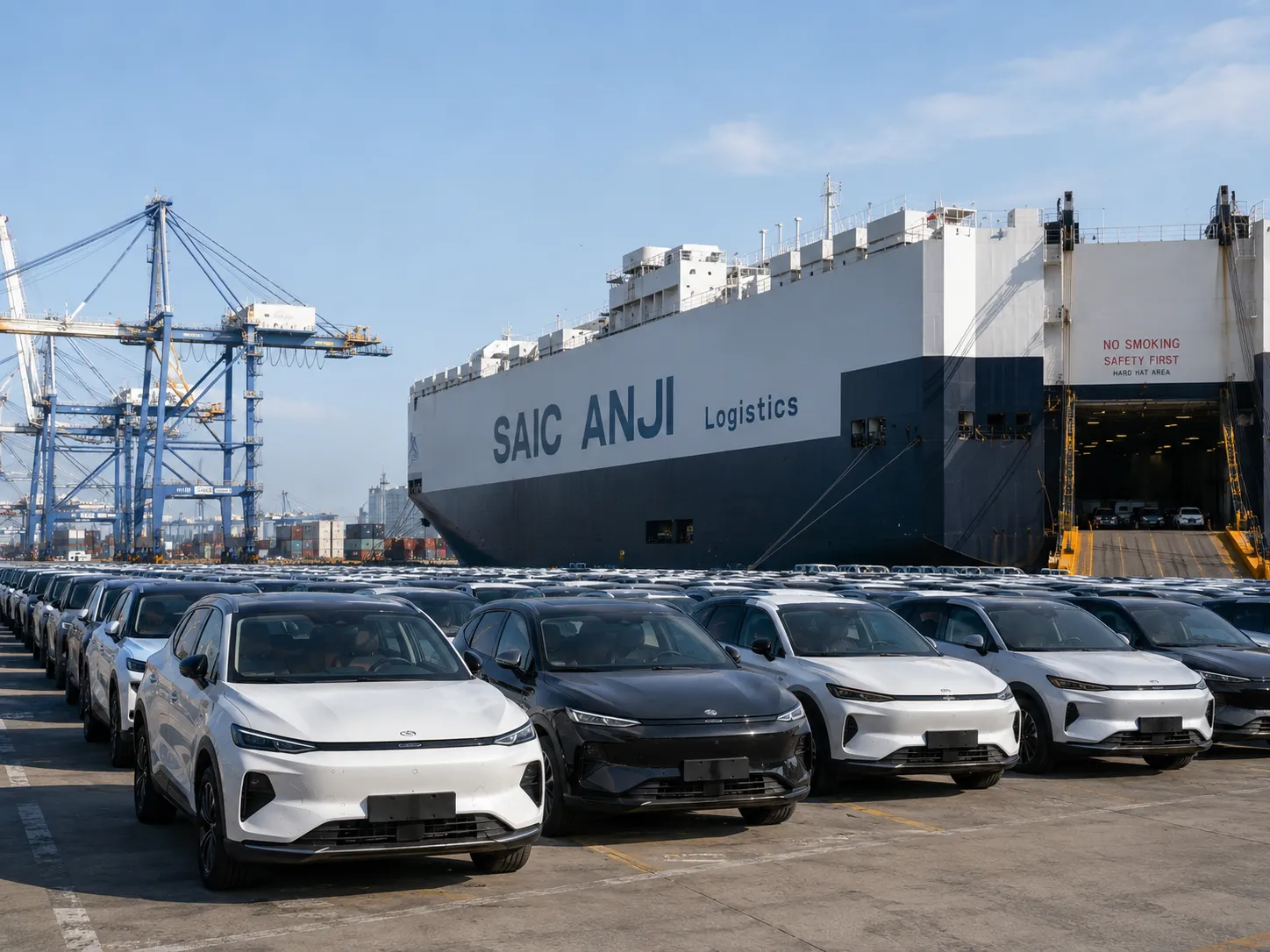
Incoterms: FOB Shenzhen/Shanghai (containerized); CIF available with freight premium.
Shipping Duration: Asia-Pacific: 25–35 days; Latin America: 45–60 days; Middle East/Africa: 35–50 days.
Multimodal Options: Ro-Ro, container, rail, and road freight available across major trade routes.
4. After-Sales and Software Support
OTA Infrastructure: Requires 4G/5G connectivity; verification of network coverage in destination markets required.
Remote Diagnostics: Factory remote access included in the first 12 months.
Parts Availability: Standard sensor components: 15–20 days; specialized units (LiDAR): 30–45 days.
Frequently Asked Questions (FAQ)
Q1: How do Chinese EV ADAS systems compare to Tesla Autopilot in real-world safety for fleet procurement?
Based on disclosed data through May 2026, Chinese systems demonstrate competitive safety metrics. Huawei's ADS 4.1 records one serious accident per 7.2 million km, while BYD's God's Eye achieves a 6x improvement over human drivers. Tesla reports approximately 1 accident per 12.2 million km with Autopilot engaged — broadly comparable, though definitional differences limit direct comparison. The critical distinction for auto suppliers lies in deployment price: Chinese manufacturers offer these systems in the $10,000–20,000 USD segment, while Western systems concentrate above $40,000 USD.
Q2: What is the minimum order quantity for ADAS-equipped Chinese vehicles — can buyers test the market with small orders?
While direct factory orders typically require 500–1,000 units, buyers looking to test-market can access ADAS-equipped vehicles through distributor networks and wholesale channels at significantly lower entry thresholds (even starting from 1 unit). This flexibility allows wholesale auto dealers to evaluate vehicle performance and local market reception before committing to large-volume procurement.
Q3: Can ADAS software updates be managed locally, or do they require connection to Chinese servers?
Current-generation systems predominantly use manufacturer cloud infrastructure hosted in China. For enterprise fleet buyers, manufacturers offer regional data hosting options (AWS or Azure instances in the buyer's home region) at premium pricing, enabling compliance with data sovereignty regulations like EU GDPR or Brazil LGPD.
Q4: What happens to ADAS functionality if geopolitical tensions disrupt manufacturer support from Chinese brands?
Core L2 functions (adaptive cruise, lane keeping, automated emergency braking) operate via onboard processing and continue functioning without cloud connectivity indefinitely. Advanced features requiring HD maps may degrade over 12–24 months if support is cut. Technology escrow provisions have been negotiated in large government fleet procurements exceeding 5,000 units.
Q5: How do wholesale car prices for Chinese ADAS-equipped vehicles compare to alternatives from other markets?
Chinese manufacturers' vertical integration enables wholesale pricing 15–22% below comparable international models. China auto suppliers offer ADAS-equipped vehicles currently representing the industry's most compelling value proposition in the $10,000–25,000 USD wholesale segment — a price range encompassing approximately 70% of global vehicle purchases. For bulk used cars procurement, software-defined ADAS maintains higher residual values through continuous OTA updates.
Q6: What are the expected lifecycle and upgrade paths for current Chinese ADAS hardware?
Platforms like BYD Xuanji engineer for 5–7 year software support lifecycles with backward-compatible OTA updates. Current sensor suites possess sufficient resolution to support algorithm improvements through 2030–2031 without hardware replacement. Transition to unsupervised L3/L4 will, however, require compute platform upgrades.
About the Author — Authorized China Auto Exporter
Company Profile
Backed by Conch Group (Fortune Global 500), Zacarmate is a specialized auto export trading company providing one-stop vehicle export solutions for global wholesale buyers. With a strong state-owned enterprise background, we integrate OEM and quality channel resources to serve international clients.
Our Core Offerings
| Category | Details |
|---|
| Vehicle Types | New energy vehicles (EV / Hybrid), fuel vehicles (Sedan / SUV / Pickup), and long-mileage used cars with verified mileage. |
| Quality Guarantee | Zero major accident, flood, or fire vehicles; real odometer readings; multi-dimensional inspection; third-party inspection and video inspection supported. |
| Supply Chain | MOQ starts from 1 unit for trial orders; domestic logistics, international multimodal transport (Ro-Ro, container, rail, road). |
| Coverage Markets | Middle East, Central Asia, Africa, Southeast Asia, South America. |
| Documentation | Full compliance support: Commercial invoice, packing list, bill of lading, certificate of origin, vehicle export license. |
| After-Sales Support | Vehicle warranty agreements with authorized partners; reliable spare parts supply chains for vehicle maintenance. |
Contact us for bulk procurement inquiries, fleet evaluations, or technical diligence support on Chinese ADAS-equipped vehicles. Speak directly with our export desk for competitive wholesale pricing and supply arrangements.
Zhongan TikTech (Anhui) Co., Ltd.
Zhongan TikTech (Anhui) Co., Ltd., a Conch Group SOE, exports quality new & used vehicles globally with 40+ years' foreign trade expertise.
 EN
EN
 fr
fr  es
es  ru
ru  pt
pt