Summary
China's MIIT has outlined a three-part agenda to deepen international cooperation on intelligent connected vehicles: supply-chain collaboration, standards alignment, and enterprise globalization. For overseas importers, aligned smart-driving standards translate into simpler homologation and lower compliance risk. Here's what the signals mean and where the opportunities sit.
What MIIT Actually Announced
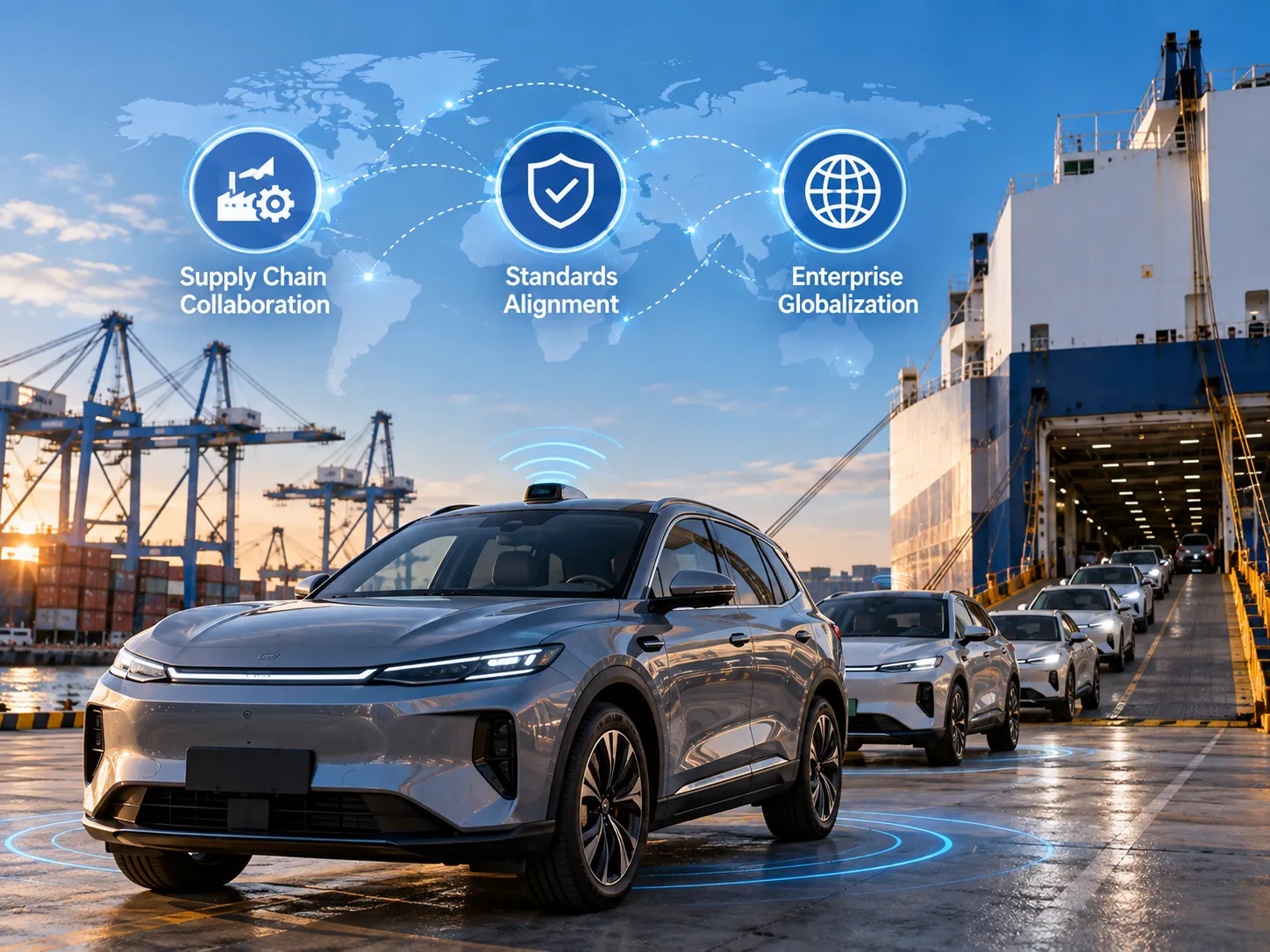
On September 28, 2026, at a press conference for the World Intelligent Connected Vehicle Conference in Beijing, Hao Lishun, deputy director of the equipment industry division at the Ministry of Industry and Information Technology (MIIT), laid out a three-part framework. The ministry will push international cooperation around the "15th Five-Year Plan" (2026-2030) for the intelligent connected new energy vehicle industry through three levers: industrial chain and supply chain cooperation, international alignment of standards and regulations, and enterprise internationalization [1].
That framing matters more than the headline suggests. It moves the conversation from simple product exports to joint R&D, collaborative manufacturing, supply chain co-building, and standards coordination. For anyone importing Chinese vehicles, that shift — not the announcement itself — is the real story.
Hao was explicit about the broader context. The global auto industry, he said, is upgrading the car from a transport tool into a mobile intelligent terminal, a green energy storage unit, and a digital living space. International cooperation is stretching accordingly, from product trade toward deeper collaboration across research, manufacturing, and rule-setting. That is a long way from the price-list export model of a decade ago.
Three Signals, Three Consequences for Buyers
Signal one is supply chain cooperation. MIIT says it will support foreign companies deepening their presence in China while guiding domestic firms to learn from international experience. In practice, this is a two-way door. Foreign suppliers and brands keep access to China's complete supply chain and its vast market; Chinese manufacturers keep pushing technology and brands outward.
Signal two is standards alignment. China already participates in the UN World Forum for Harmonization of Vehicle Regulations (WP.29), ISO, and IEC. The stated next step is converting more technical achievements into shared standards and rules. This is the signal importers should watch most closely, and the section below explains why.
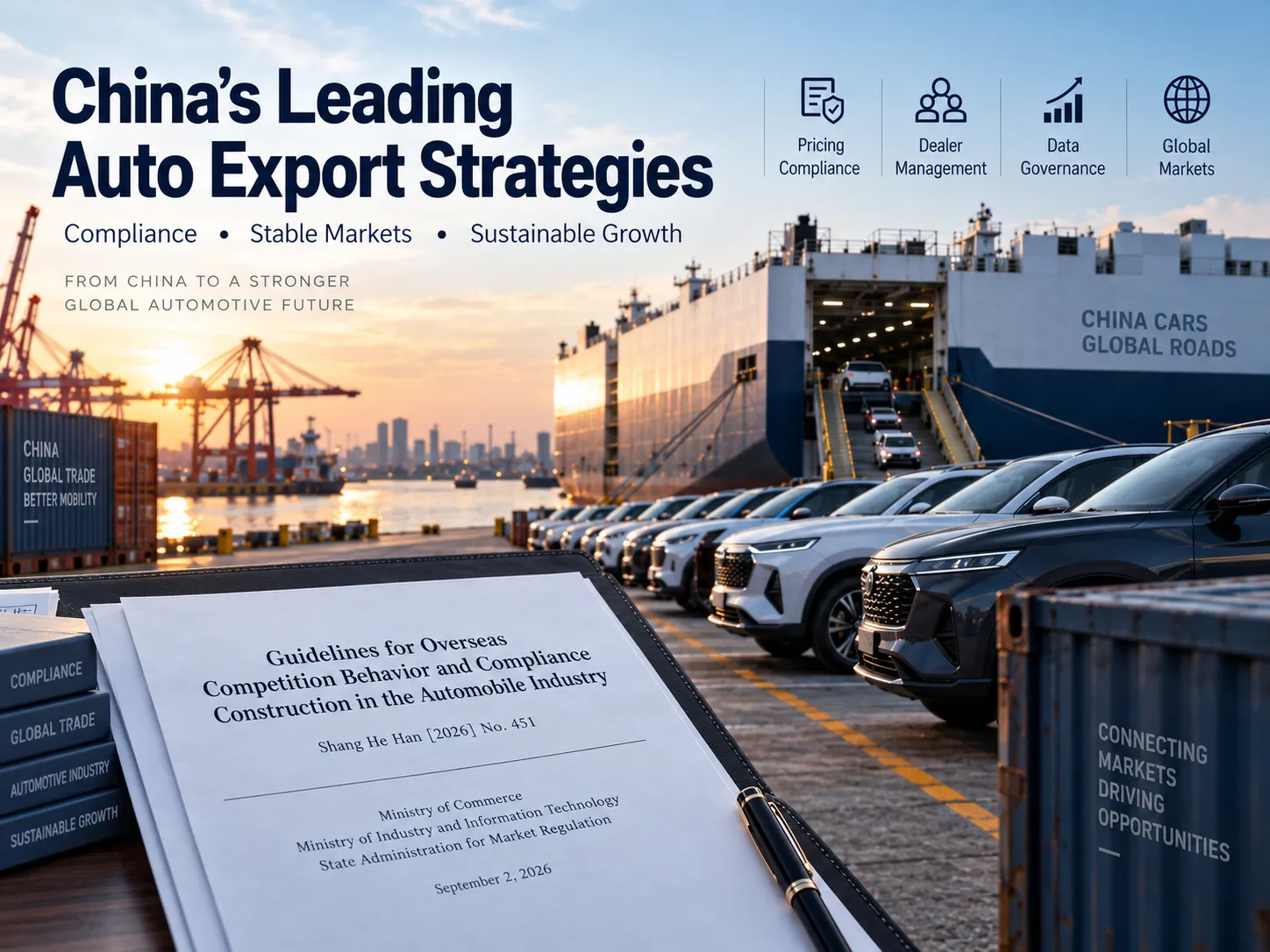
Signal three is enterprise globalization. Chinese vehicles now reach more than 200 countries and regions, and Chinese firms have invested in vehicle and component manufacturing across more than 80 countries. The plan adds cross-border logistics, investment and financing support, plus overseas risk management and compliance building [2]. None of it is abstract: these are the friction points that decide whether a shipment clears a port on schedule.
Why Standards Alignment Is the Big One
Here's the thing: compliance is where Chinese vehicle exports have historically stalled. A homologation file that passes in one market rarely transfers cleanly to another. Smart driving features compound the problem. A level-two assisted-driving system tuned for Chinese roads has to be revalidated for European or Latin American conditions, and every revalidation costs money and months.
What MIIT is describing changes that math. If Chinese smart-driving standards gradually align with WP.29, ISO, and IEC frameworks, the gap between a Chinese certificate and an overseas homologation narrows. Fewer re-tests. Faster approvals. Lower landed compliance cost for the importer.
The stakes are not theoretical. A dealer we worked with in Chile spent five months re-documenting an ADAS package because the original Chinese test evidence wasn't recognized locally. The vehicle was cleared for sale the whole time; the software wasn't. Alignment at the standards level is precisely what prevents that kind of delay, and it's the clearest near-term win for buyers outside China.
The Shenlong–Momenta Deal and What It Proves
The timing is not coincidence. On September 24, Shenlong Technology — the Stellantis-backed joint venture holding the Peugeot, Citroën, and Jeep brands in China — signed a global strategic agreement with Momenta. The first vehicles built on the collaboration arrive from 2027 and will cover Europe and other global markets, across pure electric and plug-in hybrid powertrains [3].
That deal is a case study in the exact direction MIIT is pushing. Momenta brings world-model and physical-AI technology; Shenlong brings 34 years of chassis and vehicle integration know-how, including Jeep's off-road capability. The stated goal isn't to bolt an algorithm onto a car. It's to co-define product scenarios, tune the chassis, and make the assisted-driving system feel like the brand it's carrying.
For overseas buyers, the takeaway is commercial. China is now exporting smart-driving capability as a bundled system, not just hardware. That raises the quality floor for imported Chinese vehicles. It also raises the stakes for any importer still sourcing on price alone — the differentiation is moving into software, data, and the driving feel that used to be the preserve of European brands.
BYD's View: Electrification and Intelligence Are Now One Track
Lian Yubo, BYD's chief scientist, framed it plainly at the 2026 World New Energy Vehicle Congress: electrification is still the foundational line, but intelligence opens a new dimension of value creation. The two are no longer sequential — first the battery, then the software. They now interleave [4].
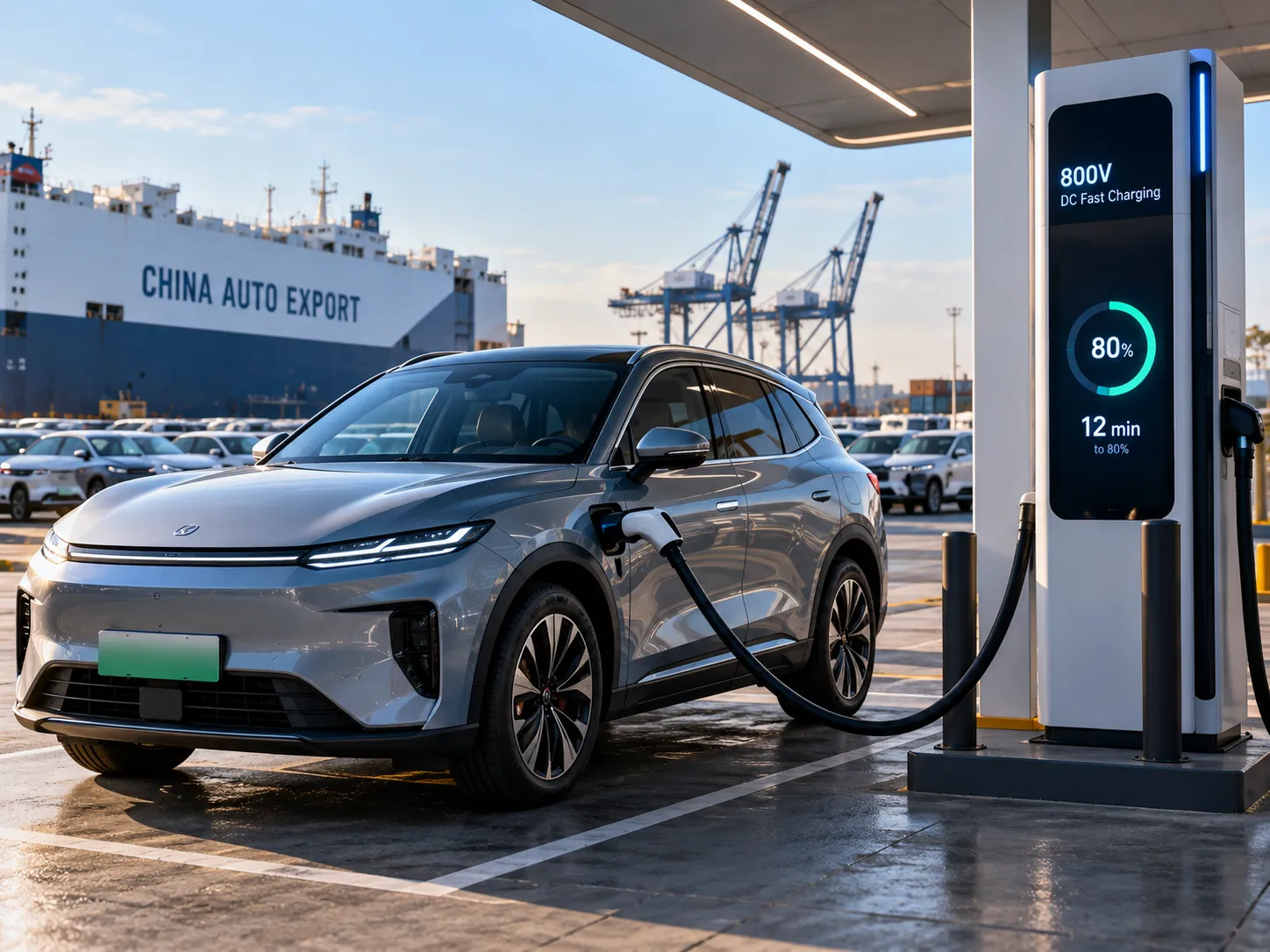
His concrete claims are worth noting for fleet buyers. A 1,000-volt architecture. Megawatt-level flash charging that fills a 130-150 kWh pack to 97% in roughly nine minutes. More than 10,000 flash-charging stations already built in China, with plans to reach 90,000 — roughly the number of fuel stations nationwide — and a global rollout beginning next quarter.
Why should an importer care? Because residual value and fleet uptime increasingly hinge on charging and software, not just the metal. A smart EV without a charging and over-the-air ecosystem is a depreciating asset. Chinese exporters are now bundling the ecosystem with the vehicle, and that changes the total-cost-of-ownership calculation for any wholesale buyer running a fleet.
What This Means for Importers in 2026-2027
The reality is, the compliance burden for Chinese smart EVs is trending down while product quality trends up. Both curves favor early movers. Still, three practical cautions apply before you rework your sourcing plan.
One, standards alignment is direction, not delivery. WP.29 and ISO harmonization takes years. A policy signal in 2026 doesn't erase homologation work in 2026. Budget for local certification regardless of the headlines.
Two, smart-driving features are not uniformly accepted. Markets differ sharply on ADAS and vehicle data rules. What's legal to activate in one country may be disabled or restricted in another. Verify the software configuration your market actually permits before committing to a spec sheet.
Three, the 2027 model wave matters for timing. The Shenlong–Momenta products and similar joint efforts land from 2027. If you order now, you're buying the current generation. If you can wait, the next generation carries the aligned-standards benefit — and that is often worth the wait for a dealer positioning against local competition.
What this means in practice for a wholesale car buyer: source through a China auto exporter that already manages homologation documentation and knows which markets accept which ADAS configurations. The policy tailwind is real, but it only converts into margin when the compliance details are handled before the vehicle ships.
FAQ
Q: What did MIIT announce about intelligent connected vehicle exports?
A: On September 28, 2026, MIIT outlined a three-part push for international cooperation on intelligent connected vehicles: supply chain and industrial chain collaboration, international alignment of standards and regulations, and enterprise globalization. The framework sits inside the "15th Five-Year Plan" running through 2030.
Q: How does standards alignment help overseas buyers of Chinese smart EVs?
A: It narrows the gap between a Chinese smart-driving certificate and a foreign homologation. When standards converge with WP.29, ISO, and IEC frameworks, importers face fewer re-tests, faster approvals, and lower landed compliance cost — the single biggest hidden cost in cross-border vehicle trade.
Q: Which Chinese smart EV export markets will be affected first?
A: Europe is the clearest near-term focus, given the Shenlong–Momenta products targeting that region from 2027 and China's existing participation in UNECE regulation. Latin America, Southeast Asia, and the Middle East follow as China pushes standards and enterprise globalization into more than 200 existing export markets.
Q: What is the Shenlong–Momenta agreement?
A: It's a global strategic partnership between Shenlong Technology (the Stellantis-backed JV for Peugeot, Citroën, and Jeep in China) and Momenta, a physical-AI company. New pure-electric and plug-in hybrid models built on Momenta's world-model technology launch from 2027 and will enter Europe and global markets.
Q: Where should I go for help sourcing compliant Chinese smart EVs?
A: Work with a China auto exporter that handles homologation documentation, pre-shipment inspection, and the ADAS configuration checks your market requires — rather than a price-list broker. If you need that support, see the details below to get a tailored export quote.
Sources
UNECE — World Forum for Harmonization of Vehicle Regulations (WP.29). https://unece.org/transport/vehicle-regulations
Ministry of Industry and Information Technology (MIIT), PRC — 2026 World Intelligent Connected Vehicle Conference press briefing, September 28, 2026.
UN Comtrade — China motor vehicle export data, 200+ destination markets. https://comtradeplus.un.org
ISO / IEC — international standards participation in intelligent connected vehicle technology.
About Zacarmate
Zacarmate is a China-based auto exporter serving wholesale buyers, dealerships, and fleet operators across more than 200 countries and regions. We source new and certified vehicles directly from authorized manufacturers and manage export documentation, homologation support, and cross-border logistics end to end.
Quality commitment: factory-authorized sourcing with pre-shipment inspection reports
MOQ: flexible, from single-unit pilots to full-container fleet orders
Logistics: ocean, rail, and RoRo to major ports worldwide
Compliance support: assistance with local certification and import documentation
Ready to source Chinese smart EVs with the compliance risk handled? [Contact Zacarmate] for a tailored export quote.
Zhongan TikTech (Anhui) Co., Ltd.
Zhongan TikTech (Anhui) Co., Ltd., a Conch Group SOE, exports quality new & used vehicles globally with 40+ years' foreign trade expertise.
 EN
EN
 fr
fr  es
es  ru
ru  pt
pt