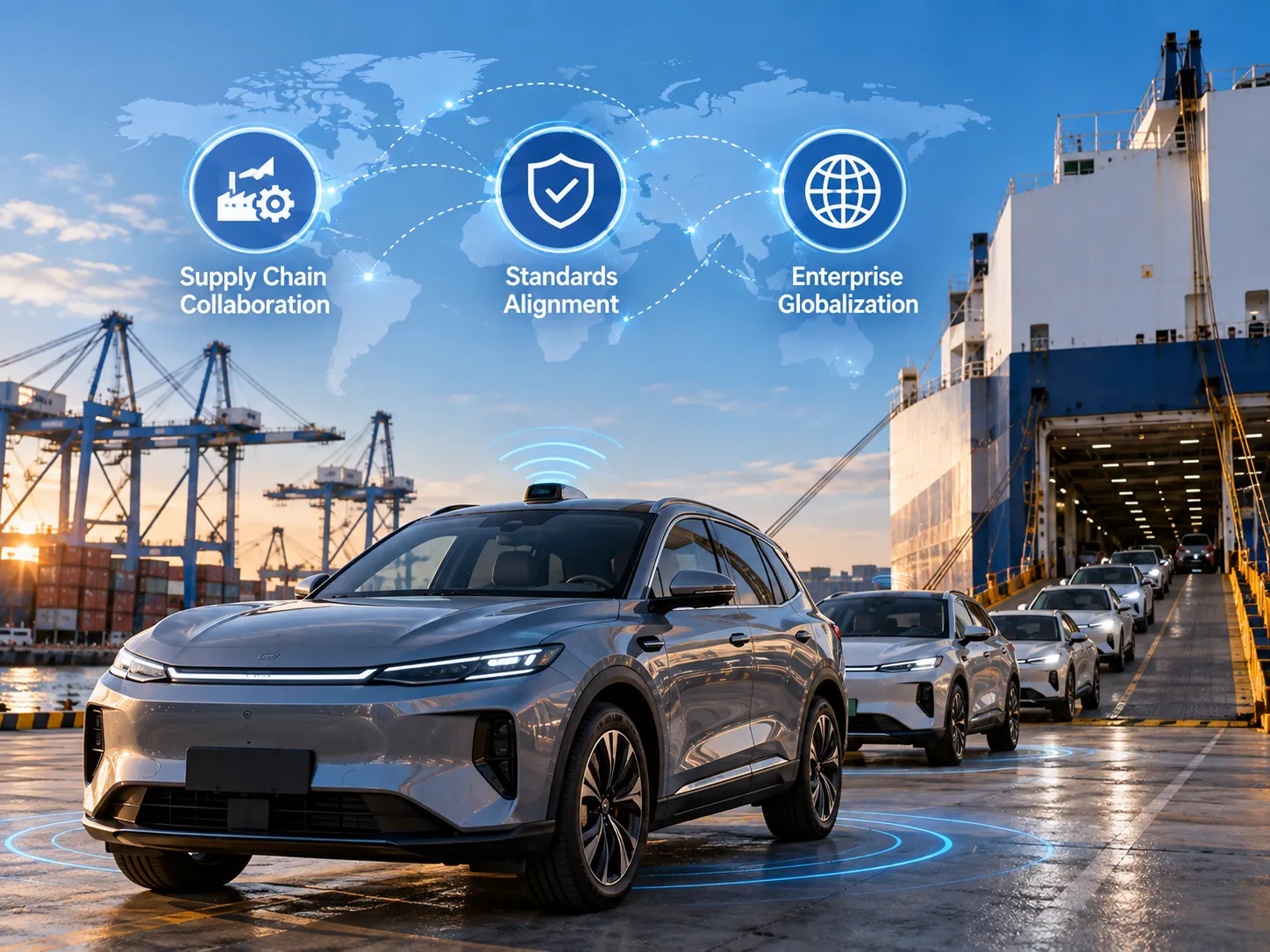
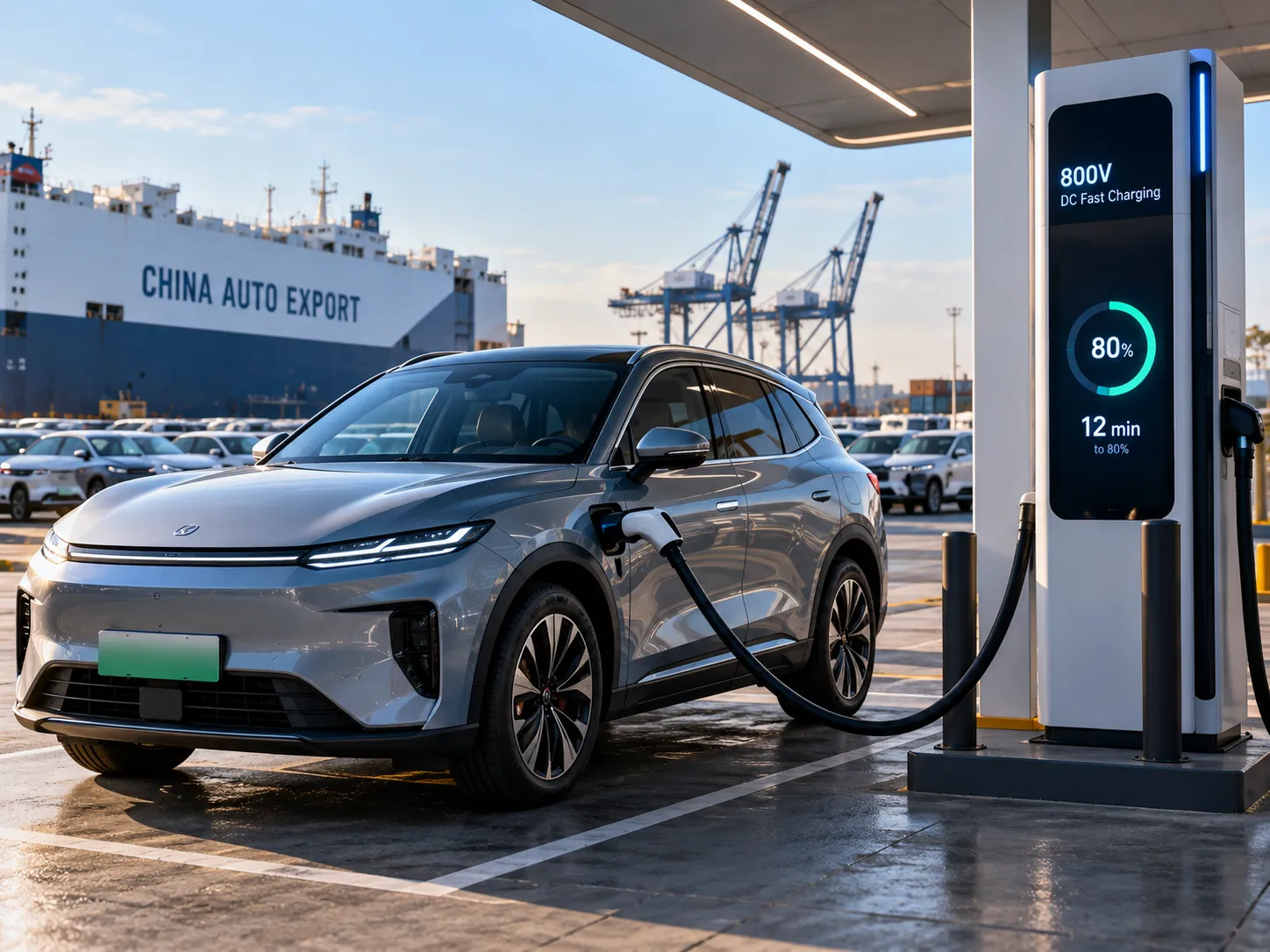
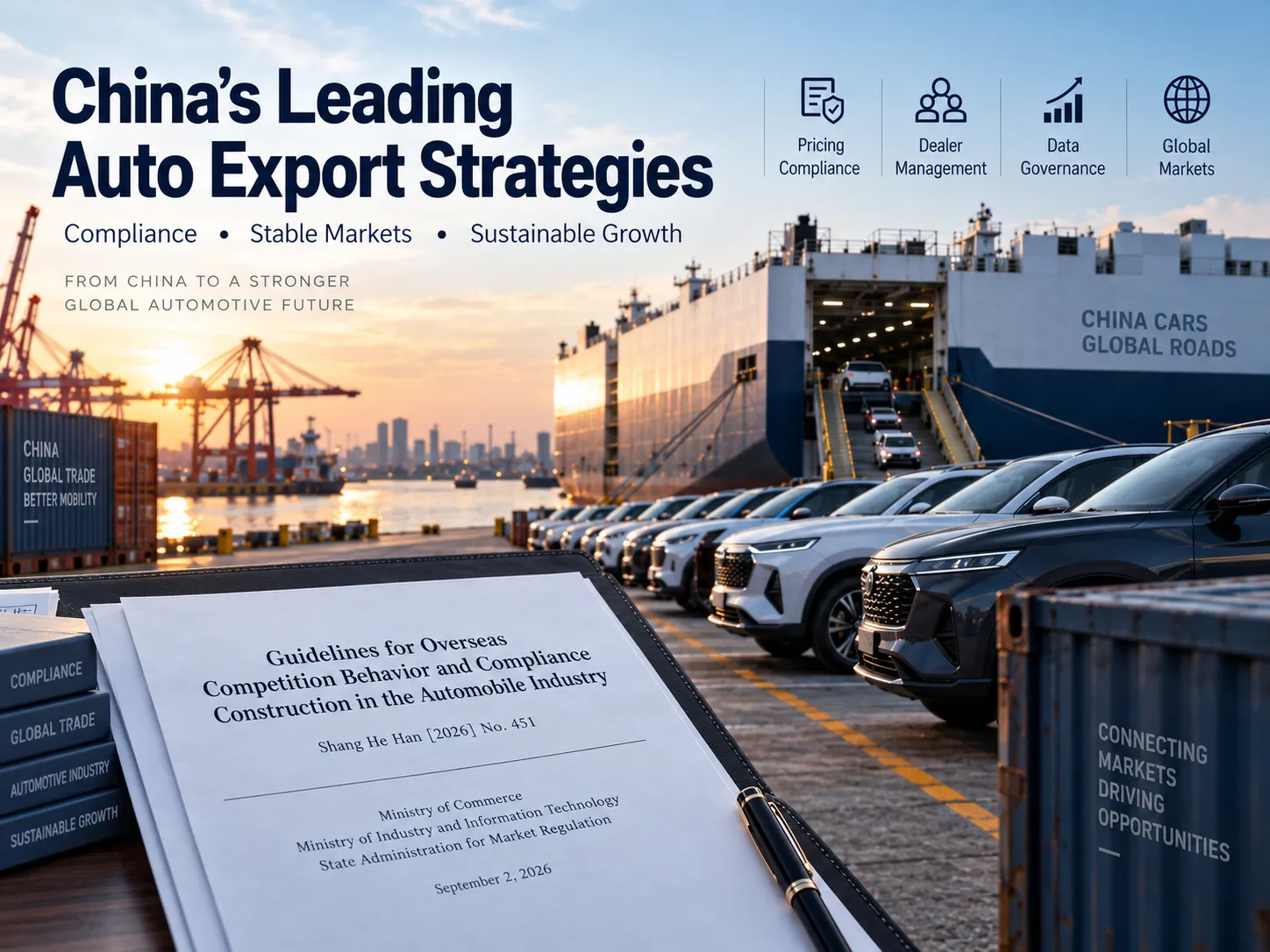
China's used-car exports grew more than 70% in 2026, and many markets still impose zero tariffs on used Chinese NEVs. But the boom carries a battery problem: out-of-warranty packs, gray-market "add-on" modifications, and a home market where 73.6% of dealers lost money. Here's what overseas dealers must verify before buying.
Why 2026 Is "Year One" of China's Used-Car Export Boom
The export figures are unambiguous. Industry reporting carried by AutoHome shows China's total vehicle exports grew more than 70% in 2026, and the used-car segment earned its "outbound year one" label in the same period. Three forces converged.
Trade policy is unusually favorable. Many countries apply no import tariff on Chinese new-energy used vehicles while levying high tariffs on fuel-powered car imports. That asymmetry hands Chinese used EVs a structural price edge at the border that few other export lanes can match.
Scale is expected to follow. Wang Meng, founder of the used-car media brand Ershouche Xiaopang Shuo, projects China could become the world's largest used-car exporter, moving 3–5 million units a year. He cautions the process will be a "big wave sifting sand" — only a minority of sellers will survive overseas.
China's automakers have already normalized exporting. Chinese auto brands have reached the fourth stage of going global: product export, local assembly, local R&D, and now rooting production in target markets. Chery has built market-specific brands; BYD develops models for overseas demand while manufacturing locally. For a used-car importer, this maturity matters — parts, service networks, and brand recognition are increasingly in place in the markets you actually sell into.
The Home-Market Squeeze Pushing Inventory Overseas
The simplest reason used cars are cheap in China right now is that the domestic market is in freefall. The 2026 first half tells the story:
Automakers launched 630 new models in H1 while industry profit margins were compressed to just 1.5%.
New-car sales still fell more than 20%, and the used-car market caught up to match it.
The China Automobile Dealers Association reports a 73.6% loss rate across the used-car industry in H1. Strip out the interest cost of dealers' own capital, says Wang Meng, and the real loss rate approaches 90%.
Used-car volumes grew only 1.5%, and of the roughly 180,000 physical used-car dealers in China, about 30,000 shut down in H1 — with a similar number expected in H2.
The pain is visible in real inventory. High-end C-class cars, the kind of stock that used car wholesalers and Chinese car dealers once held as "safe" collateral, are losing roughly ¥15,000 in value per month. When new-car prices keep falling, every day a used car sits on the lot widens the loss. Export has become the industry's emergency exit valve — the only channel that clears inventory at the volume the domestic market cannot absorb.
As Luo Lei, vice president of the China Automobile Dealers Association, puts it, the industry is "crawling with difficulty." Dealer circles now repeat a blunt rule of thumb: get your fundamentals right and survive to see 2027.
EV Economics Have Flipped — In Importers' Favor
Here is the data point that matters most for procurement decisions. Global average prices for electric vehicles have fallen below hybrid prices. According to analyst firm Mobility Global, EVs averaged about $37,000 last year, down 9% from 2020, while hybrids rose 16% to about $39,000. The figures use sticker prices, exclude subsidies, and are weighted by sales volume.
Three forces drove the crossover. Batteries account for 30–40% of an EV's cost, and China controls roughly 80% of global battery capacity, keeping prices down. BloombergNEF estimates passenger-car battery prices fell 37% cumulatively from 2020 to 2025. And manufacturers are shifting to lower-cost lithium-iron-phosphate (LFP) cells that avoid expensive cobalt — Renault and Volkswagen both announced LFP models last year.
The knock-on effect is a structural shift in what your customers will pay. China and Norway have already shown that where EVs reach price parity with combustion cars, adoption accelerates; emerging markets are expected to replicate the pattern. The International Energy Agency projects battery-electric and plug-in hybrid models will account for roughly 30% of global car sales in 2026. For wholesale vehicle sales, this is the window: Chinese EVs give you price-competitive stock at the precise moment end demand for affordable electric mobility is surging.
Where the Demand Is: Thailand, Mexico, and the Emerging-Market Playbook
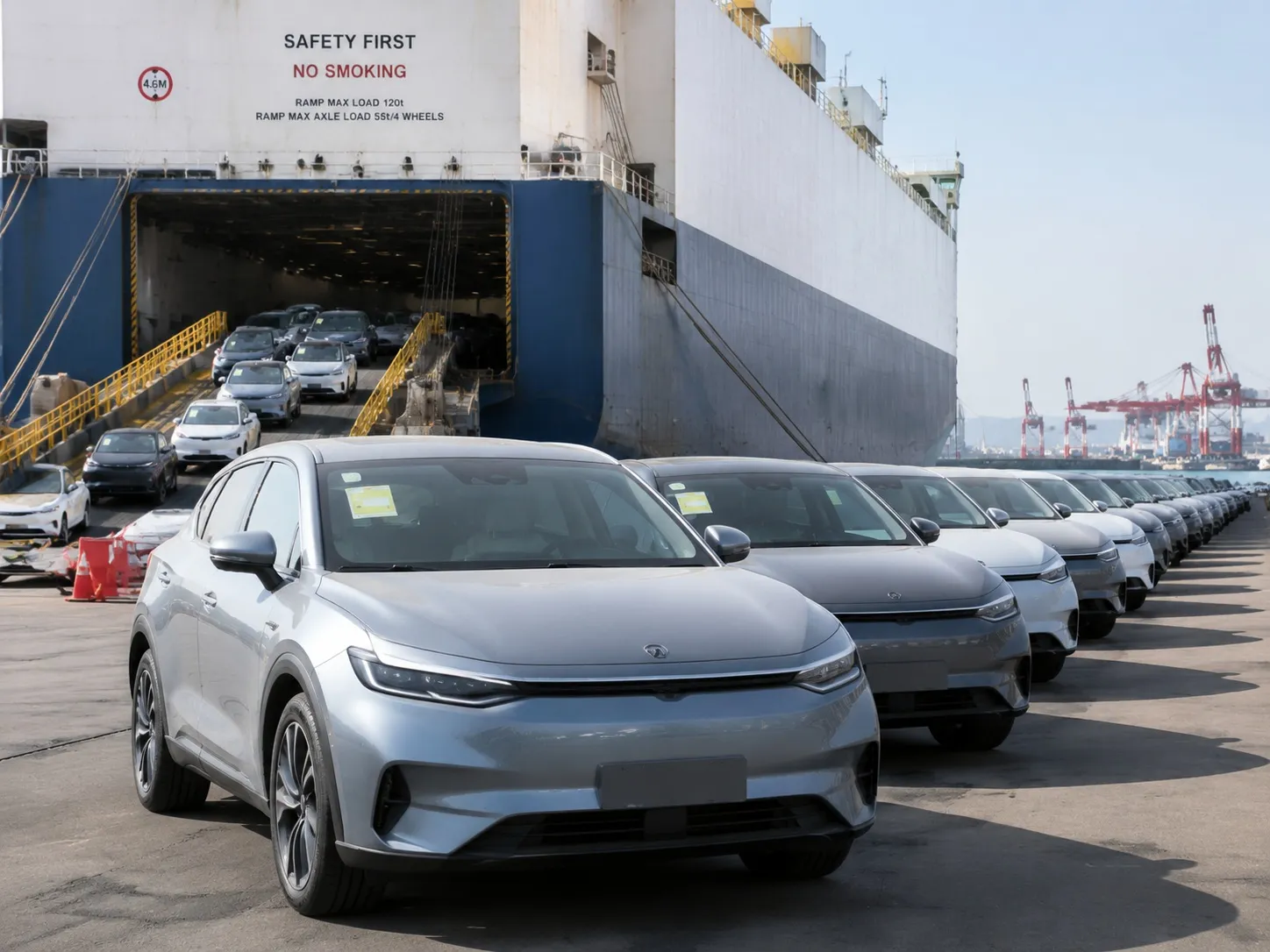
The export map is already forming. According to China Association of Automobile Manufacturers data, China exported 1.64 million EVs in 2025, versus fewer than 100,000 in 2020. Thailand and Mexico are the principal markets, driven by value-conscious buyers. Chinese brands now account for close to 30% of new-car sales in Thailand, and the country is actively courting EV investment — BYD and Great Wall Motor both run local plants there.
Southeast Asian and South American markets already show EV prices below hybrids. Thai authorities have combined purchase incentives with factory-attraction policy, and importers can ride that momentum into the used segment: a car that built local brand recognition as new stock has an easier second life as used inventory.
A caution from Chinese industry observers: localization is what makes export durable. The brands winning overseas are the ones that respect local markets and build local supply chains. For used-car importers this is practical intelligence — before you commit to a source market, verify that service, parts, and brand support actually exist locally. Otherwise you inherit the warranty problem at the other end of the route.
The Battery Cliff: What 8-Year-Old EVs Really Cost
This is the issue most buyers miss. China's first wave of mass-market EVs — concentrated around 2016 with a nominal 300 km range — is now crossing the 8-year warranty threshold en masse. For a private car driven 10,000–20,000 km a year, battery degradation of 10–15% over six years is manageable. For former ride-hail vehicles driven 80,000–100,000 km a year, capacity can drop 30–40% in three to four years, with some packs falling below 60% health.
The economics create a trap. A replacement battery costs ¥50,000–60,000 — often more than the car is worth — and residual values are already low. So a gray market has emerged selling "add-on batteries": for ¥10,000–20,000, an installer drops a battery pack into the trunk or under the floor and wires it in. At 400–800 yuan per kWh, a 20 kWh add-on costs about ¥15,000–20,000 and adds roughly 160 km of range. Documented cases include a 2015 BYD Tang gaining 227 km of pure-EV range from a 50.6 kWh pack, and a Wuling Guang jumping from 201 km to 402 km with an 18 kWh add-on.
Before dismissing this as a domestic-side curiosity, run the numbers that matter to you. Industry statistics cited by AutoHome project out-of-warranty EVs reaching 980,000 units by 2028 and 7.2 million by 2032. NIO founder William Li has estimated that about 19.4 million EVs will come off warranty over the next eight years, with potential battery-replacement costs exceeding ¥1 trillion.
For a used-car importer, this is a two-sided coin. Cheap used EVs exist now partly because battery risk is priced into residual values. But if you cannot verify the state of health of a pack — or the car's warranty status — you are importing the same ¥50,000 bill that scared off the original owner.
What Overseas Buyers Must Check Before Paying a Deposit
Battery state of health (SOH)
Demand a real diagnostic report, not a screenshot. Confirm tested range, capacity retention, and fast-charge history, since repeated fast charging accelerates degradation.
Warranty and service history
Check whether the vehicle is still inside its battery warranty and whether the brand supports the export market. "Orphan cars" from collapsed manufacturers are a known risk category.
Signs of unapproved modification
The add-on battery market is exactly the "too cheap to be safe" story that ends badly. Modified packs sit outside the vehicle's battery management system, often discard the original cooling system, and count as illegal vehicle modification in China — meaning registration, inspection, and legal standing can all be affected.
Documentation chain
The title, export license, and export registration of the vehicles exporter or dealer should be independently verifiable. In an industry with an effective loss rate near 90% at home, desperate sellers exist; verify before you pay.
Destination-market rules
Confirm tariff treatment for used new-energy vehicles in your market, local certification needs, and whether the vehicle's VIN and battery type qualify for incentives.
Procurement Guide: From Inquiry to Port
Lead times. Allow 3–6 weeks from confirmed order to departure from a major Chinese port, plus consolidation time if you are combining vehicles. Shipment to Southeast Asia typically runs 1–2 weeks at sea; to Latin America, 3–5 weeks.
Minimum order quantities. Most export-ready sellers and used car wholesalers will move a single unit, but bulk used cars — container loads or ro-ro batches — unlock materially better per-unit pricing. If you can consolidate demand before you negotiate, you will buy closer to wholesale vehicle sales levels rather than retail-plus-export.
Compliance. Confirm the vehicle's export license, title, and inspection status with the exporter, and verify your destination market's tariff and certification requirements yourself. Independent inspection before loading is non-negotiable for battery health and modification status.
Payment terms. Standard terms for established relationships are 20–30% deposit with the balance against documents such as the bill of lading. For new counterparties, use a letter of credit or third-party escrow until trust is built. Treat demands for full prepayment as a warning sign — it is a common failure signature in distressed markets.
Logistics and documentation. Use a freight forwarder experienced with vehicle exports. Confirm you receive the commercial invoice, bill of lading, certificate of origin, and any export inspection certificates required by the destination, and have a local agent handle customs clearance at your end.
Sourcing partners. Work through vetted channels rather than marketplace listings. Licensed china auto exporters and wholesale auto dealers in Guangzhou, Shanghai, or Tianjin can provide inspection access, warranty transparency, and after-sales support that casual "Chinese car for sale" listings cannot. The credible suppliers in this trade are the ones who let an independent inspector on the lot — the line between a professional partner and a one-off trader is exactly the line between a sound asset and a liability you will not see until the container arrives. And because this export channel is young, treat wholesale prices as negotiable only after you have confirmed the vehicle's battery story. Price is where the risk hides.
The Window Won't Stay Open Forever
Here is the honest summary. China's used-EV export boom is real, the volume is real, and the price advantage is real. The markets with the clearest demand — Thailand, Mexico, and the broader emerging-market belt — are opening up for electric vehicles at exactly the moment Chinese stock is available at a discount. But the industry selling to you is one where 73.6% of dealers lost money in six months, where battery risk is priced into every residual value, and where the cheapest inventory may carry hidden modification. Buyers who verify battery health, warranty status, and documentation will find genuine value. Buyers who skip those checks will be holding the battery bill that China's original owners could not pay.
The export lane is open, the tariffs are favorable, and the inventory is moving. The dealers who win this cycle will be the ones who underwrite their own due diligence instead of taking the seller's word. If you are ready to build a supply relationship that survives the wave, start with vetted exporters, independent inspection, and payment structures that protect you — and treat 2026 as the year to get in before the market matures.
Frequently Asked Questions
1. Why are used Chinese EVs so cheap right now?
The domestic market is distressed — 73.6% of used-car dealers lost money in H1 2026, new-car prices keep falling, and high-end used stock loses roughly ¥15,000 per month. Sellers use export to clear inventory quickly, which compresses wholesale prices for overseas buyers.
2. Which markets are the strongest for used EV imports?
Thailand and Mexico lead, followed by other Southeast Asian and South American markets. Chinese brands hold close to 30% of Thai new-car sales, and EVs are already cheaper than hybrids in several of these markets, so the used segment has natural demand.
3. How do I verify battery health before buying?
Request a diagnostic report showing state of health, capacity retention, and charging history. For older vehicles, factor in the original usage pattern — former ride-hail cars degrade 30–40% in three to four years, while private cars typically lose 10–15% over six years.
4. What tariffs and compliance apply to used Chinese EVs?
It varies by market, but many countries currently apply no import tariff on Chinese new-energy used vehicles while taxing fuel-car imports heavily. Confirm certification, VIN, and incentive eligibility with your local customs and transport authority before contracting.
5. Is the "extended battery" modification a deal-breaker?
Treat it as a red flag. Add-on packs sit outside the vehicle's BMS, often drop the cooling system, mix cells of different quality, and count as illegal modification in China. Importing one risks both safety and legal problems. If the price looks suspiciously low, check for signs of this work.
6. How do I start importing used EVs from China safely?
Work through a licensed china auto exporter. Expect a battery SOH report, independent pre-shipment inspection, and verifiable export documentation before any payment — MOQ from one unit for market testing. The sourcing desk below consolidates this into a single process.
Sources: China Association of Automobile Manufacturers (CAAM) EV export data; China Automobile Dealers Association (CADA) H1 2026 dealer survey; International Energy Agency (IEA) Global EV Outlook; BloombergNEF battery price index; Mobility Global EV/HEV pricing analysis.
About the Author / Sourcing Partner
This analysis was prepared by the supply chain intelligence team at Zacarmate (Zhongan TikTech (Anhui) Co., Ltd.), the state-owned auto export arm of Conch Group (Fortune Global 500). We help international dealers and fleet buyers source new and used vehicles from all major Chinese OEMs — single unit or container loads.
How we support used-EV buyers:
Battery verification: SOH diagnostic reports and independent pre-shipment inspection before you pay
Flexible volumes: MOQ from 1 unit for market testing; container and Ro-Ro consolidation
Full logistics: Domestic transport, warehousing, Ro-Ro/container/rail shipping, complete export documentation
Market guidance: Tariff, certification, and incentive checks for Thailand, Mexico, and the broader emerging-market belt
→ Contact our export desk for verified used-EV inventory and a tailored sourcing plan.

Zhongan TikTech (Anhui) Co., Ltd.
Zhongan TikTech (Anhui) Co., Ltd., a Conch Group SOE, exports quality new & used vehicles globally with 40+ years' foreign trade expertise.
 EN
EN
 fr
fr  es
es  ru
ru  pt
pt