A used EV should not be inspected like a gasoline vehicle with a quick battery check added at the end. The battery pack, battery-management system, charging system, thermal management, high-voltage components and electronic controls can all influence the vehicle's condition and commercial value.
For an international buyer, the pre-export inspection should therefore combine conventional vehicle assessment with EV-specific diagnostics. The objective is not merely to confirm that the car can drive. It is to determine whether the vehicle's battery, charging system, high-voltage components and software are suitable for the destination market.
Why Is Inspecting a Used EV Different From Inspecting a Gasoline Car?
A conventional used-car inspection focuses on the engine, transmission, suspension, brakes, steering, body and electrical systems.
An EV has a different propulsion architecture. Its main value-bearing systems include the battery pack, electric motor, inverter, battery-management system, onboard charger and thermal-management system.
That means the inspection needs additional diagnostic information.
The battery should be treated as a major vehicle component rather than a simple consumable. Its condition can influence driving range, charging performance, resale value and potential future repair costs.
What Should Be Checked During a Used EV Battery Inspection?
The first objective is to obtain measurable battery information.
Depending on the vehicle and diagnostic tools available, an inspection may examine state of health, state of charge, fault codes, cell voltage differences, battery temperature data, charging history and evidence of previous battery repair or replacement.
A professional inspection should also check the physical condition of the battery enclosure and the underside of the vehicle for impact damage.
The report should identify how the battery information was obtained. Simply writing “battery good” provides limited value to a remote international buyer.
Why Does Battery State of Health Matter?
State of health can provide an indication of the battery's remaining usable performance compared with its original condition.
However, buyers should avoid treating a single SOH percentage as a universal prediction of future battery life. Different manufacturers can use different calculation methods, while battery aging is affected by temperature, charging behaviour, chemistry, usage and time.
Battery information should therefore be considered together with fault codes, charging performance, vehicle history and physical condition.
How Should Charging Performance Be Tested?
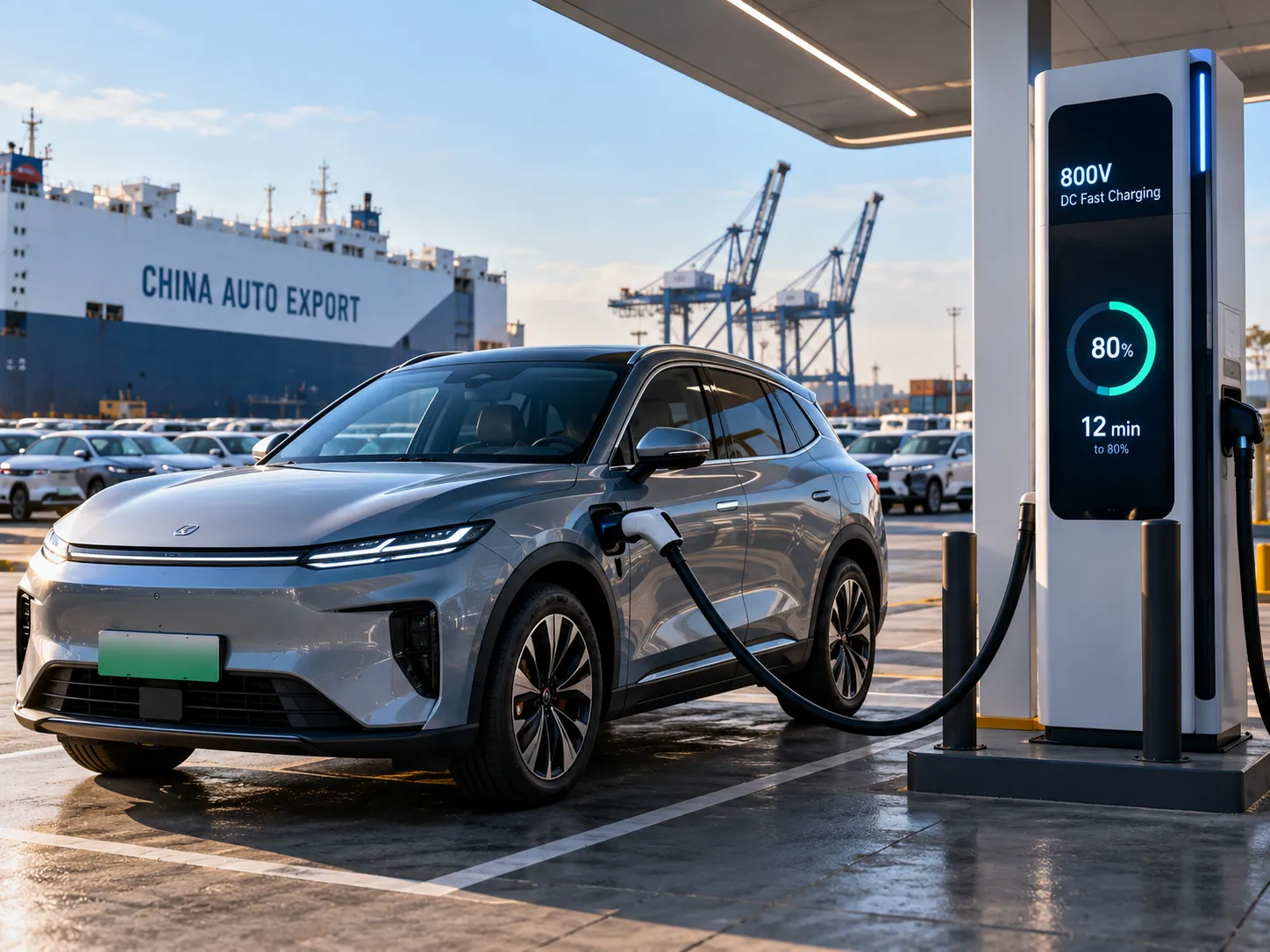
Charging should be tested whenever practical before shipment.
The inspector should confirm whether the vehicle initiates charging normally and whether the charging process remains stable. Any charging-related warning codes should be recorded.
The buyer should also verify the charging connector and destination-market infrastructure.
A vehicle may have a healthy battery but still be inconvenient for customers if the required charging infrastructure is uncommon in the destination country.
This makes charging compatibility a commercial issue as well as a technical issue.
Which High-Voltage Components Should Be Inspected?
Battery condition is only part of the EV powertrain.
The inspection should also consider the electric motor, inverter, onboard charger, DC-DC converter, high-voltage cables, thermal-management system and relevant control modules.
The underbody deserves particular attention because the battery enclosure can be exposed to impact from road debris or accidents.
Evidence of severe impact, deformation, water intrusion or improper repair should trigger additional technical investigation before the vehicle is approved for export.
Why Should EV Software Be Checked Before Export?
Modern EVs rely heavily on software for charging management, navigation, connectivity, driver-assistance functions and vehicle configuration.
A vehicle originally sold for the Chinese market may have software or connected functions that behave differently after export.
International buyers should therefore check which functions remain available in the destination country, whether local connectivity is supported and whether diagnostic access will be available to local service technicians.
Software compatibility should be treated as part of the vehicle specification rather than an optional convenience.
How Do Destination-Market Requirements Affect Used EV Selection?
The EV must satisfy both technical and regulatory requirements in the destination market.
For the European Union, vehicle type approval involves safety, environmental and conformity-of-production requirements. Other markets have their own requirements concerning vehicle approval, charging equipment, safety, electrical systems and registration.
The buyer should therefore confirm market access before purchasing the vehicle.
This is especially important when importing vehicles originally designed for another market configuration.
Which Used EV Models Should International Buyers Evaluate?
The right model depends on local demand and infrastructure.
For example, buyers considering kia ev used vehicles should examine the exact battery system, model year, charging specification, service support and local demand.
A different market may be more familiar with premium electrified vehicles. In that situation, mercedes electric car used inventory may require a different inspection emphasis, particularly around high-voltage diagnostics, software functions and premium-component repair costs.
Buyers evaluating zeekr car china vehicles should likewise verify battery condition, charging compatibility, software functionality and destination-market service capability before shipment.
The inspection requirements should always be adapted to the specific model and the market where it will operate.

What Should an EV Pre-Export Inspection Report Contain?
| Inspection Area | Main Checks |
|---|
| Vehicle identity | VIN, model, year and configuration |
| Body | Paint, panels, glass and accident evidence |
| Structure | Chassis and underbody condition |
| Suspension | Steering, suspension and alignment |
| Braking | Brake components and electronic systems |
| Battery | SOH, diagnostic data and fault codes |
| Charging | AC/DC charging function and connector |
| Powertrain | Motor, inverter and high-voltage components |
| Thermal management | Battery and powertrain cooling/heating |
| Electronics | Diagnostic scan and warning codes |
| Software | Regional functions and configuration |
| Documentation | History, inspection and export documents |
This format makes the report more useful for a buyer who cannot physically inspect the vehicle.
How Does Battery Condition Affect the Commercial Value of a Used EV?
Battery condition can affect both the customer's expected ownership cost and the dealer's resale risk.
A vehicle with strong battery condition and complete documentation may be easier to market than one with uncertain battery history.
Conversely, an EV with unexplained charging faults or significant battery degradation may require further diagnosis before a buyer can determine its true value.
This is why the inspection report should preserve actual diagnostic findings rather than relying on general statements about battery quality.
What Documents Should a Chinese Used-EV Exporter Provide?
The documentation should include the VIN, vehicle history, mileage, inspection report and export documentation. For EVs, buyers should additionally request any available battery diagnostic data and charging-test information.
China's current used-vehicle export rules require third-party inspection and require export vehicles to satisfy applicable destination-market access standards.
Battery documentation is also becoming more important internationally. In the European Union, the Batteries Regulation establishes requirements around battery information and provides for an electronic battery passport for electric-vehicle batteries from 18 February 2027. Buyers serving the EU market should therefore monitor the applicable regulatory timeline and documentation requirements.
What Should Buyers Do If the Battery Report Is Incomplete?
The buyer should not automatically reject the vehicle, but the uncertainty should be treated as a commercial risk.
The next step may be additional diagnostic testing, a charging test, physical inspection of the battery enclosure or verification of service records.
If reliable battery information cannot be obtained, the buyer should avoid treating the vehicle as equivalent to another unit with complete battery documentation.
For fleet or dealer purchases, this distinction becomes particularly important because a small uncertainty repeated across many units can create a larger warranty or after-sales exposure.
Frequently Asked Questions
Is a Normal Used-Car Inspection Enough for an EV?
No. A used EV requires additional inspection of the battery, high-voltage system, charging equipment, thermal management and electronic controls.
What Is the Most Important Battery Inspection Item?
Battery state of health is important, but it should be evaluated together with fault codes, cell data where available, charging performance, battery history and physical condition.
Does Low Mileage Guarantee a Healthy EV Battery?
No. Battery aging depends on factors including time, temperature, charging behaviour and usage conditions, not mileage alone.
Should Charging Be Tested Before Export?
Yes. Charging tests can identify problems that may not appear during a conventional road test.
Can Every Chinese EV Be Exported to Any Market?
No. Import eligibility depends on destination-market regulations, vehicle configuration, technical standards and registration requirements.
Why Is Battery Documentation Becoming More Important?
Because battery condition is increasingly relevant to used-EV valuation, repair decisions, resale and regulatory transparency. European battery regulations are also increasing the importance of structured battery information.
Conclusion
A used EV requires a different pre-export inspection mindset because the battery and high-voltage system are central to both vehicle performance and commercial value. Exterior condition and mileage remain important, but they cannot provide a complete picture of an EV's condition.
For international buyers, the strongest approach is to combine conventional vehicle inspection with battery diagnostics, charging tests, high-voltage checks, software verification and destination-market compliance review before shipment. This creates a more complete technical record and reduces the uncertainty associated with purchasing used EV inventory remotely.
External References
Zhongan TikTech (Anhui) Co., Ltd.
Zhongan TikTech (Anhui) Co., Ltd., a Conch Group SOE, exports quality new & used vehicles globally with 40+ years' foreign trade expertise.

 EN
 fr
 es
 ru
 pt